
Log Casey VINE Alerts
Write down the source agency, event label, and time shown before making another call. Those details let Casey jail staff or DOC distinguish a real custody change from an old record, duplicate name, or delayed feed. They also create a clear trail if a later screen changes. Keep the alert itself, but rely on the agency record for the final custody conclusion.
Read Casey Release Events Carefully
A VINE release date marks custody information reported through the network. It does not by itself state why Casey custody ended. Bond, dismissal, time served, sentence expiration, parole, and transfer have different meanings. Bond ordinarily leaves a case pending under conditions. Parole changes confinement to supervised community status. Transfer ends one agency's control but continues custody. A court-ordered discharge can also occur too quickly for advance notice.
Match the alert to the source population. Casey JailTracker covers people reported in the county jail now. It is not a past-release archive. KOOL covers Kentucky DOC offenders and can retain state identity, sentence, institution, and supervision details after the local roster changes. A DOC Daily Releases report offers dated state evidence. CourtNet shows the legal case and order. BOP covers a federal sentence. No single screen spans all these populations.
When someone needs to plan for contact, use the alert time as the start of verification. Call the source facility through an official number, provide enough identity details to avoid a namesake, and ask whether the event was community release or transfer. Agencies may limit what they disclose, but a precise request for public custody status is more useful than assuming what an automated label means.
If the person still appears in Casey custody after an alert, do not decide that either source is automatically wrong. Feed timing and processing can differ. Save both observations with their times, ask the agency to reconcile the event, and check again. If the person disappears without a VINE result, request the jail movement or release record and inspect the court case. The two-source rule works in both directions.
Casey County VINE Coverage
Kentucky VINE means Victim Information and Notification Everyday. The statewide service receives custody information from reporting local jails and adult correctional facilities. Kentucky agencies also describe feeds from prisons, mental-health facilities, and juvenile detention centers. For Casey County, that makes VINE relevant to a person reported by Casey County Detention Center and to a Kentucky Department of Corrections offender. The legal custodian still matters. A local booking, a DOC-controlled sentence, and a federal sentence belong to different record systems even when the person once passed through the same jail.
VINE answers a narrow question: what custody status or event is the participating agency reporting for this person? It is not a court docket or a permanent archive. A current record may identify the holding jail or institution. Kentucky's Attorney General says that, when the person is no longer in custody, the service gives the date released. That date must be read with the event type. A transfer can end a Casey County custody episode while confinement continues elsewhere.
The official entry points are VINELink, the Kentucky Attorney General's VINE guidance, and the Kentucky DOC custody-search guidance. Each has a distinct role. VINELink supplies the search and alert tools. State guidance explains notice behavior and coverage.
Search One Casey County Inmate
Begin with enough information to distinguish the person from others with a similar name. A middle name, age, date of birth, or agency identifier can prevent a false match. Keep the search tied to Kentucky. If the person may have entered another state's custody, run a separate search there rather than treating a Kentucky no-match as proof of release.
- Open VINELink and choose Kentucky.
- Select the offender or custody search offered on the page.
- Enter the person's name or an available identification number.
- Compare age, birth information, ID, and facility details before choosing a result.
- Open the record and read the exact status, location, and event date.
- If the record says released, confirm whether the event was discharge, bond, parole, or transfer.
Too many criteria can hide a record when a name or date differs. Try a broad name search, common spelling variants, and known aliases. A no-match calls for another official channel. Check the Casey current roster for present custody, KOOL for a DOC-controlled person, and CourtNet for the order or outcome. The full sequence appears on the Casey County released-inmates page.
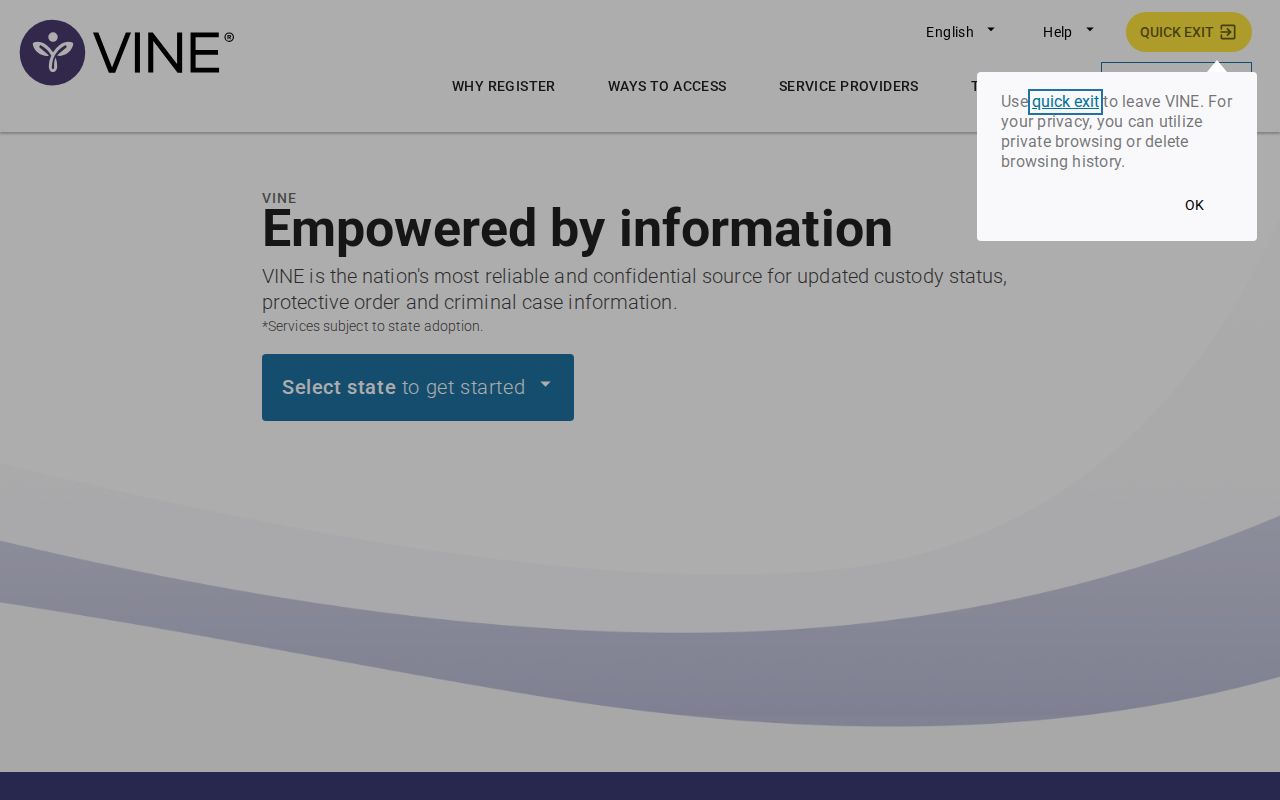
The successful manifest capture comes from the official service. The VINELink Kentucky selection and search screen illustrates the state-first path.
Casey County Release Fields
The available fields depend on the source agency and record. Do not expect every Casey County result to have the same layout. Use displayed identifiers to verify the match, then preserve the site's exact wording when noting the status or date. “Released” is not a synonym for acquitted, and it does not erase a pending case or a supervision term.
| Field | What it can establish |
|---|---|
| Name and identifier | Whether the custody result belongs to the intended person. |
| Custody status | The current state reported by the participating agency. |
| Facility or location | Which jail or institution supplied the reported custody. |
| Released date | The date the source says that custody ended, not always the minute of discharge. |
| Event type | Whether notice concerns release, transfer, escape, or another offered change. |
A still-listed person is reported in custody. Someone who has left the Casey roster may appear in VINE with a released date, but roster absence alone does not reach that conclusion. Ask Casey County Detention Center for the end time, authority, and destination. For a DOC offender, compare VINE with KOOL and a DOC Daily Releases report. A court order may explain why release became lawful, though it will not always show when staff finished processing.
Set Casey County Release Alerts
Registration starts from the matched in-custody record. Choose only events useful to the purpose, then supply the contact route offered by the live system. Kentucky materials describe phone, text, email, TTY, and in-app methods. Availability can vary. Registration is anonymous, but save the confirmation and keep the contact information current.
- Open the verified custody record and select notification registration.
- Choose release, transfer, escape, or another event offered for that record.
- Select phone, text, email, TTY, or app delivery.
- Enter the destination and finish confirmation.
- For phone alerts, create a memorable four-digit PIN.
- Enter that PIN when called to acknowledge the notice and stop repeat calls.
Kentucky guidance says two telephone numbers may be registered. Jail-release calls repeat every 30 minutes for up to 24 hours or until acknowledged. State-institution release notice may be attempted 72 hours before release. Some events cannot support advance warning. Immediate credit changes, court-ordered discharge, parole timing, and escape can lead to notice only after the event. Telephone search and registration are available at 800-511-1670, with TTY service at 866-847-1298.
Confirm Casey County Release Alerts
VINELink is not the controlling federal locator. For a sentenced federal person, use the Federal Bureau of Prisons Inmate Locator. A BOP record can show a past or projected federal release date, while a federal court docket can show the detention or release order. Neither is replaced by Kentucky VINE. Immigration custody also follows its own locator and paperwork.
Agency feeds can lag. Names can be misspelled, identities can be confused, and one agency can release a person directly to another. For a local Casey episode, seek the jail release timestamp and destination, then pair it with a CourtNet disposition or order. For DOC custody, read the exact KOOL status and check the dated DOC release report. Two matching official sources give a firmer answer than one alert.
Casey VINE Courts Ended
Kentucky custody VINE remains available, but Kentucky DOC states that VINE Courts is no longer provided. A person can register for a jail or prison custody event, yet cannot rely on that registration for a bond ruling, dismissal, sentencing event, or later court disposition.
Use public CourtNet for a Casey County case search. District Court commonly handles misdemeanors, traffic matters, first felony stages, and early bond activity. Circuit Court handles felony indictments and judgments. Search both levels where appropriate, then obtain the authoritative file from the Casey clerk. A court order explains legal authority. The jail or DOC record confirms the actual custody event.
Casey Release Two-Source Rule
Kentucky DOC has documented a past vendor problem that generated false release notifications. That local history does not make VINE useless. It explains why no single automated message should carry the whole conclusion. Save the notice time, person details, reported facility, and stated event. Then contact the source that supplied the custody data.
At Casey County Detention Center, ask whether custody ended and whether the exit was to the community or another agency. For a state offender, compare KOOL status with a DOC Daily Releases entry or the underlying movement record. For a bond or dismissal, read the court order as well. This sequence respects what each source can prove and avoids calling a transfer a community release.
Note: A missing current-roster name is a lead, not proof that Casey County custody ended in community release.
Search Casey County Records
A search should begin with the custody system that controlled the person. Use VINE for a reported Kentucky event, KOOL for state correctional status, the Casey jail for a local release record, and CourtNet for the legal case. Keep federal and immigration records in their separate official systems.
Sponsored Results